Play video games together with your family and friends
Overview
In March 2014, I joined a startup in Shenzhen, the hardware innovation center in China. The startup aimed at renovating the overall user experience of smart TV OS. At that phase, the company was working on a mobile remote control app named HexLink (video demo), and we wanted to design TV applications that use this remote control.
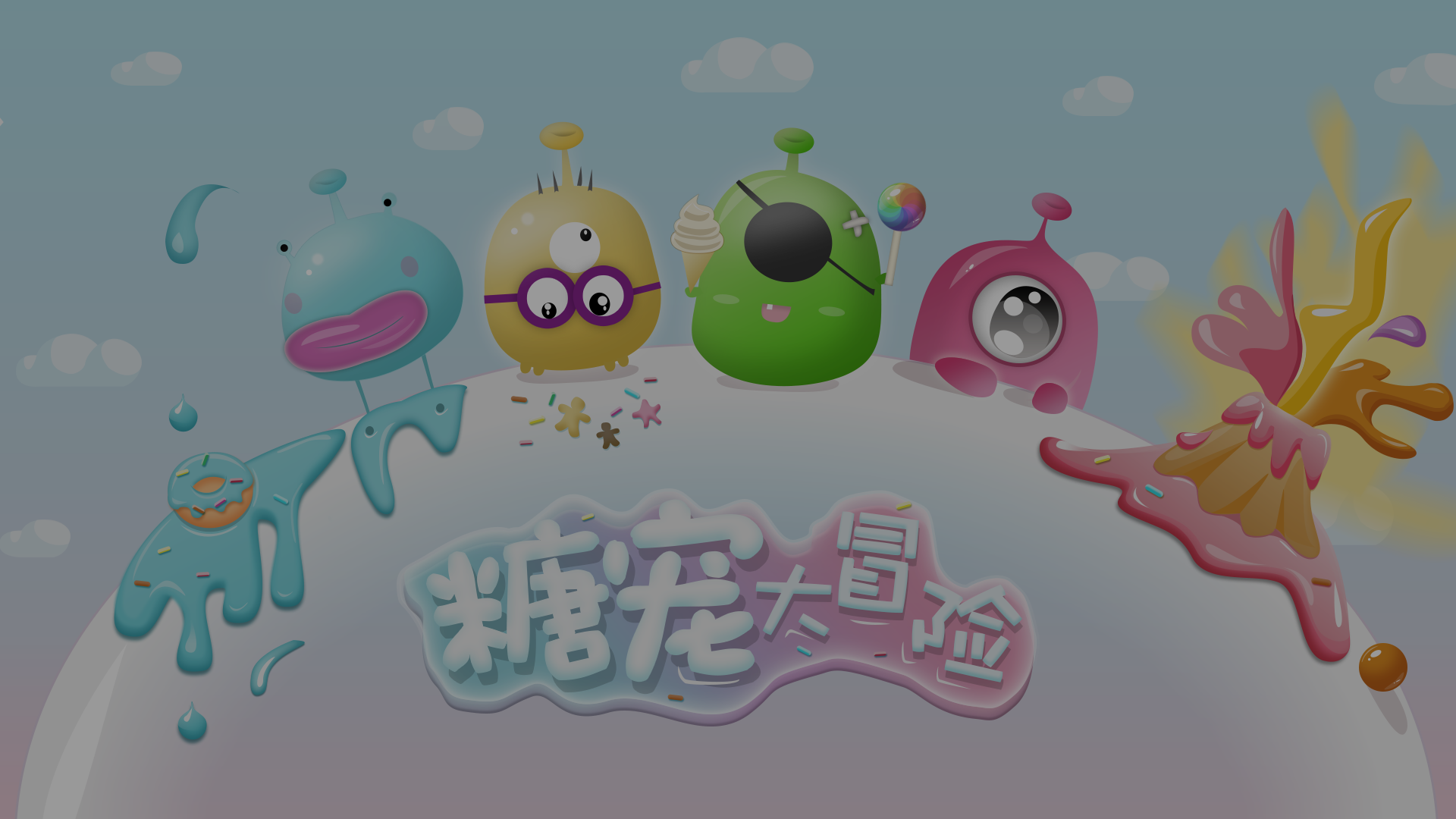
In a small agile team of 2, we created this video game called Candy Adventure, which inherited the mechanics of the classic game Puzzle Bobble and incorporated brand new features to adapt to the Chinese video game market. Applying an agile development method, we created this game through several quick sprints and released it after 2 months. The number of active users reached 1,000 within 1 week of release, and it had over 100,000 downloads as of June 2015.
- Keywords — video game, collaborative game, agile development, MVP, startup, game character design, game scene design, animation, TV remote control
- My role — Product Designer, collaborating with 1 developer
A desktop demo of the game
Problems & opportunities
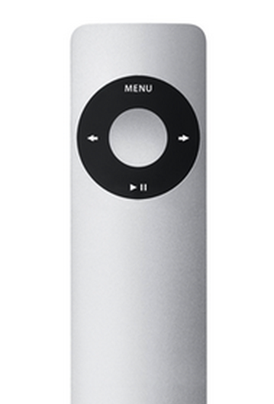
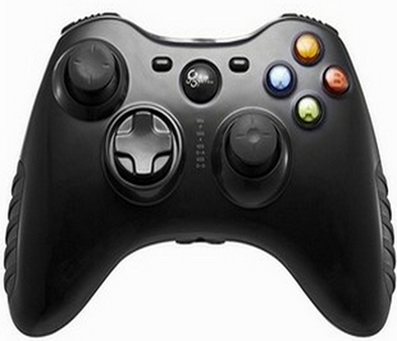
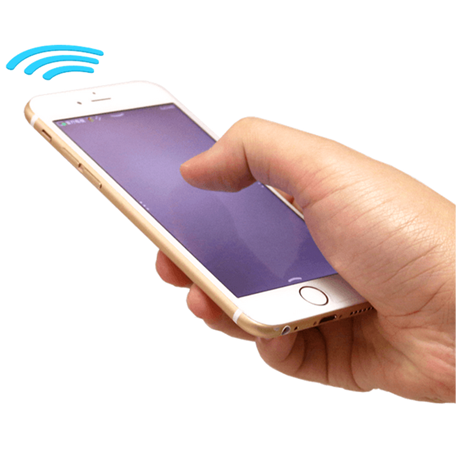
We wanted to design a game that uses our remote control app, HexLink. HexLink solved the problems of the widely-used smart TV control methods at the time.
| TV remote | Joystick | HexLink | |
|---|---|---|---|
 |
 |
 |
|
| Continuous control | No | Yes | Yes |
| Directions | 4 | 4 | All directions |
| Number of players | 1 | 2 | Unlimited |
| Extra cost | Yes | Yes | No |
First, HexLink offers continuous control — users don't click one button to move one step in one direction, but control the movement continuously by moving their fingers in the app. A joystick partially solved this, but it still has only four directions and adds extra cost.
Second, HexLink brings the opportunity for multi-player entertainment on TV. TV is originally a shared entertainment tool, watched by family members sitting together in a living room.
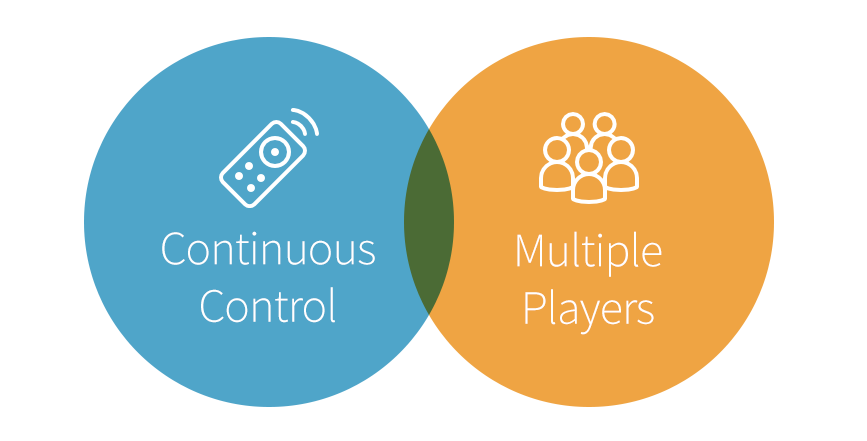
This is how we came up with our idea. What if there were a collaborative video game that multiple family members could play together intuitively, using our remote app, without having to pay for extra devices? After doing a competitive analysis we found, with delight, that there was no single game doing this in China's Android TV app store. So we quickly started our plan.
Process
As a startup team, we had to move fast to be first in the market, so we decided to build on classic game mechanics. After brainstorming, we came up with two rough initial ideas, formed two agile groups of two, and got started.
- Group 1 — an airplane navigation game
- Group 2 — a leisure Puzzle Bobble game
As the designer for the second group, I was responsible for the whole product design: features, mechanics, interaction, visual, sound, animation, and everything else. I collaborated closely with the other developer, and was also part of user testing, marketing, and operation.
Sprint 1
In the first sprint we quickly created an MVP that supported only the key mechanic of the game, while incorporating the sharing nature and intuitive control method. One design challenge was how to lay out the screen to support multiple players. I tried different versions — players in the center shooting outward, players in parallel at the bottom shooting up, and others. I picked the one with four players in the four corners, because more interaction could happen with a shared workspace and bouncing walls.
We mocked up two distinct visual versions in order to test users' general expectations and feedback. We tested the MVP at an industry conference, with experts in the area as well as random users.
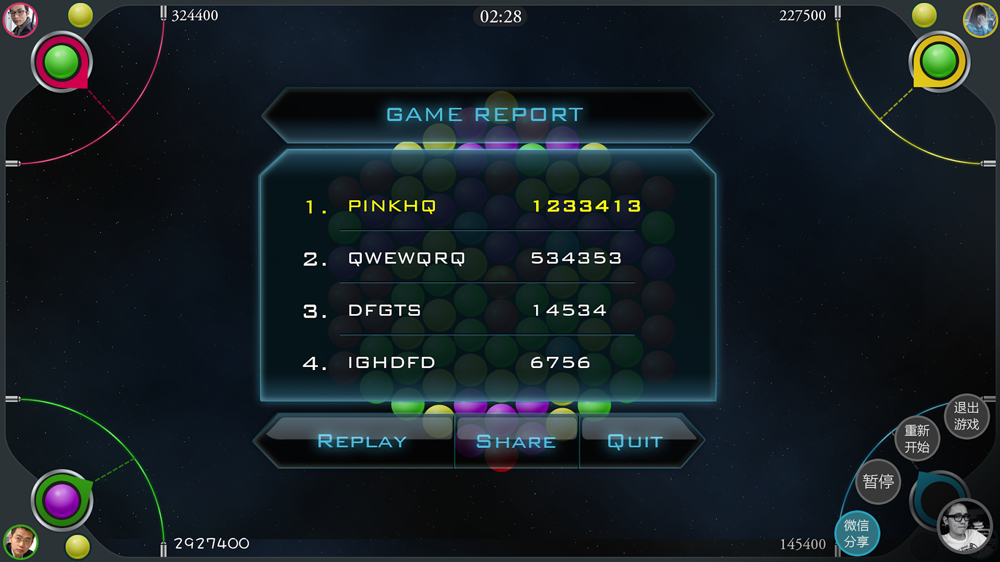
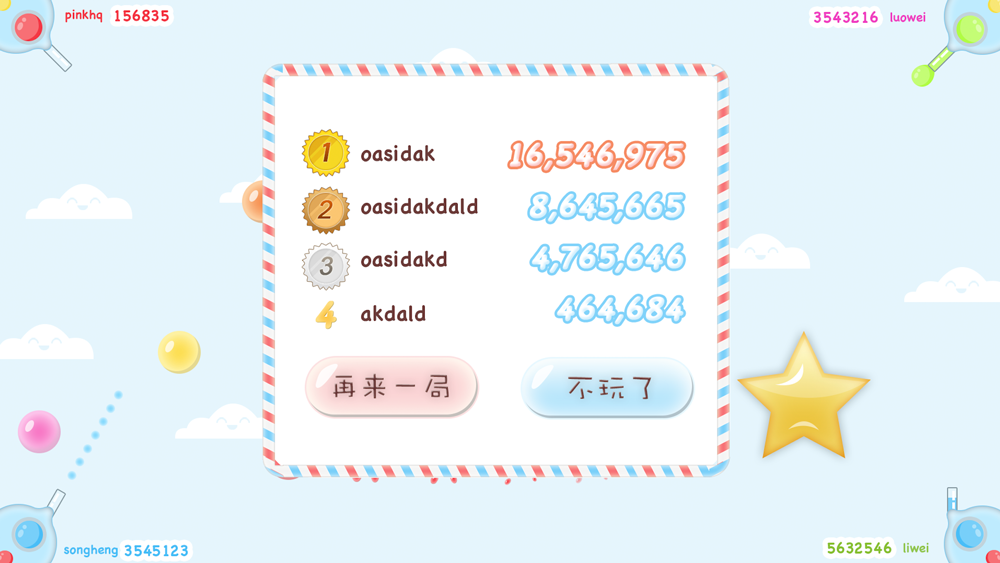
Two visual directions tested with users
Participants enjoyed the game and easily got addicted to it. Some interesting dynamics emerged that informed our further iterations:
- People were more likely to control direction with horizontal finger movement than vertical.
- Players often applied the strategy of killing others first, then focusing on clearing the bubbles.
- Players who died first found it boring to wait for the game to start over.
- The game appealed more to women than men, and the cute version was better received.
Sprint 2
In our second sprint we not only enhanced the two major strengths of the game — the continuous control method and collaboration — but also put effort into creating a unique aesthetic identity:
- Completed and revised our mechanics to make the game more fun and balanced, for example by adding more collaborative dynamics.
- Improved the user experience by creating tutorials, fine-tuning the control algorithm, and iteratively testing the workflows.
- Created a story that set the tone and guided the evolution of the game plot, rebuilding this classic game.
- Fine-tuned the visual design toward appealing aesthetics and pixel perfection, to give the game more identity.
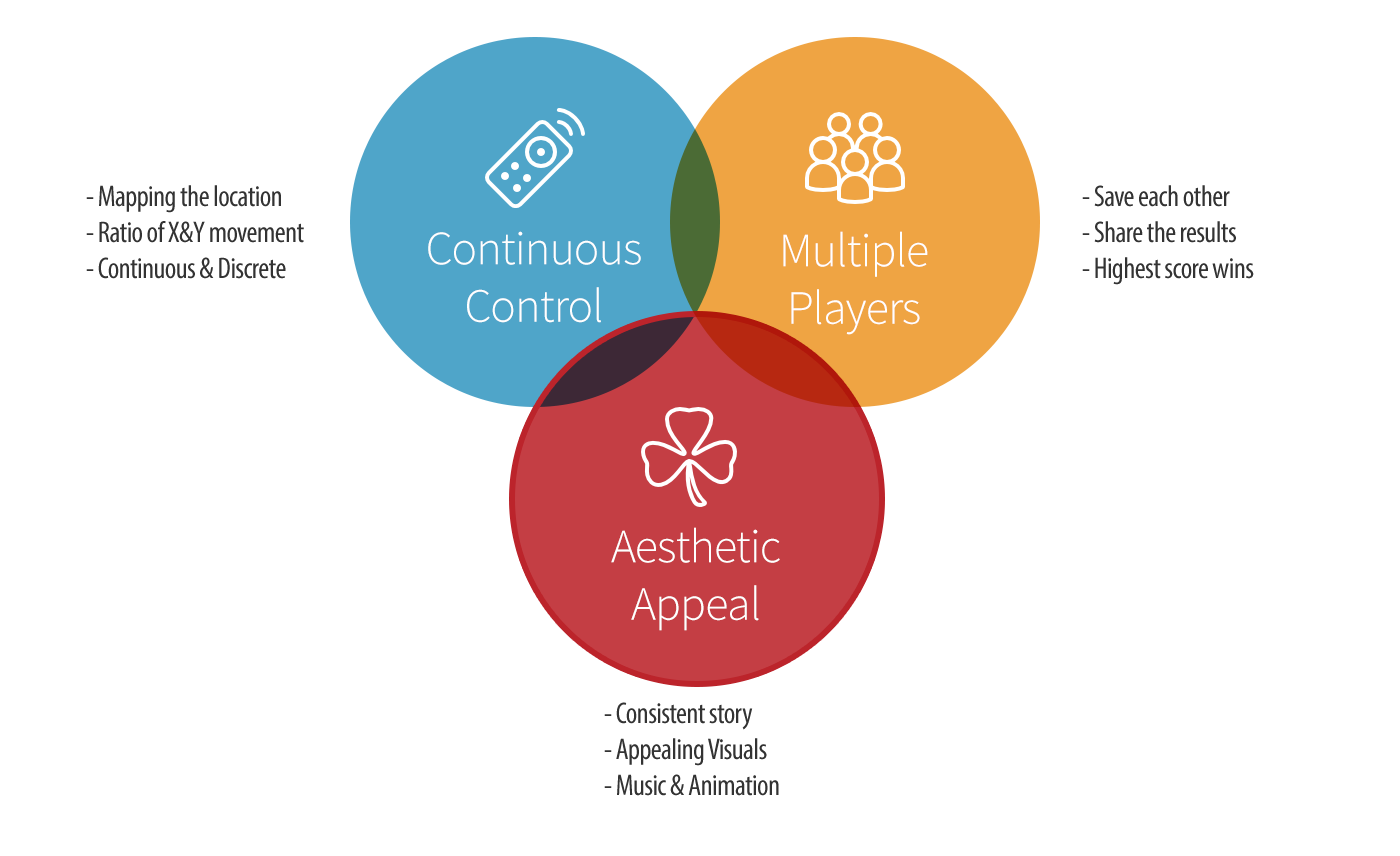
Game mechanics
From the user research we found that players often applied the strategy of killing others first and then focusing on clearing the bubbles — and the people who were killed complained about waiting around for others to finish.
So we added the mechanic of saving other people and coming back to life. If you clear the bubbles that killed another player, that player comes back.
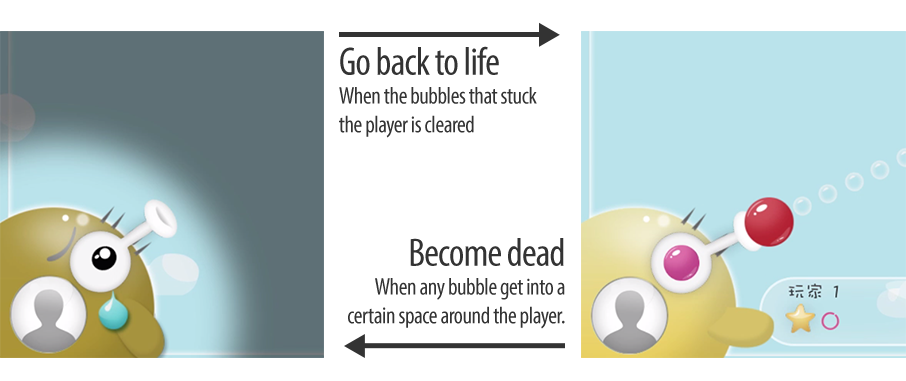
Mechanics of die and reborn
We also included the feature to share results on WeChat, China's most popular messaging app, which gives people the opportunity to show their achievement to friends. See the responsive sharing page I designed and implemented for this feature.
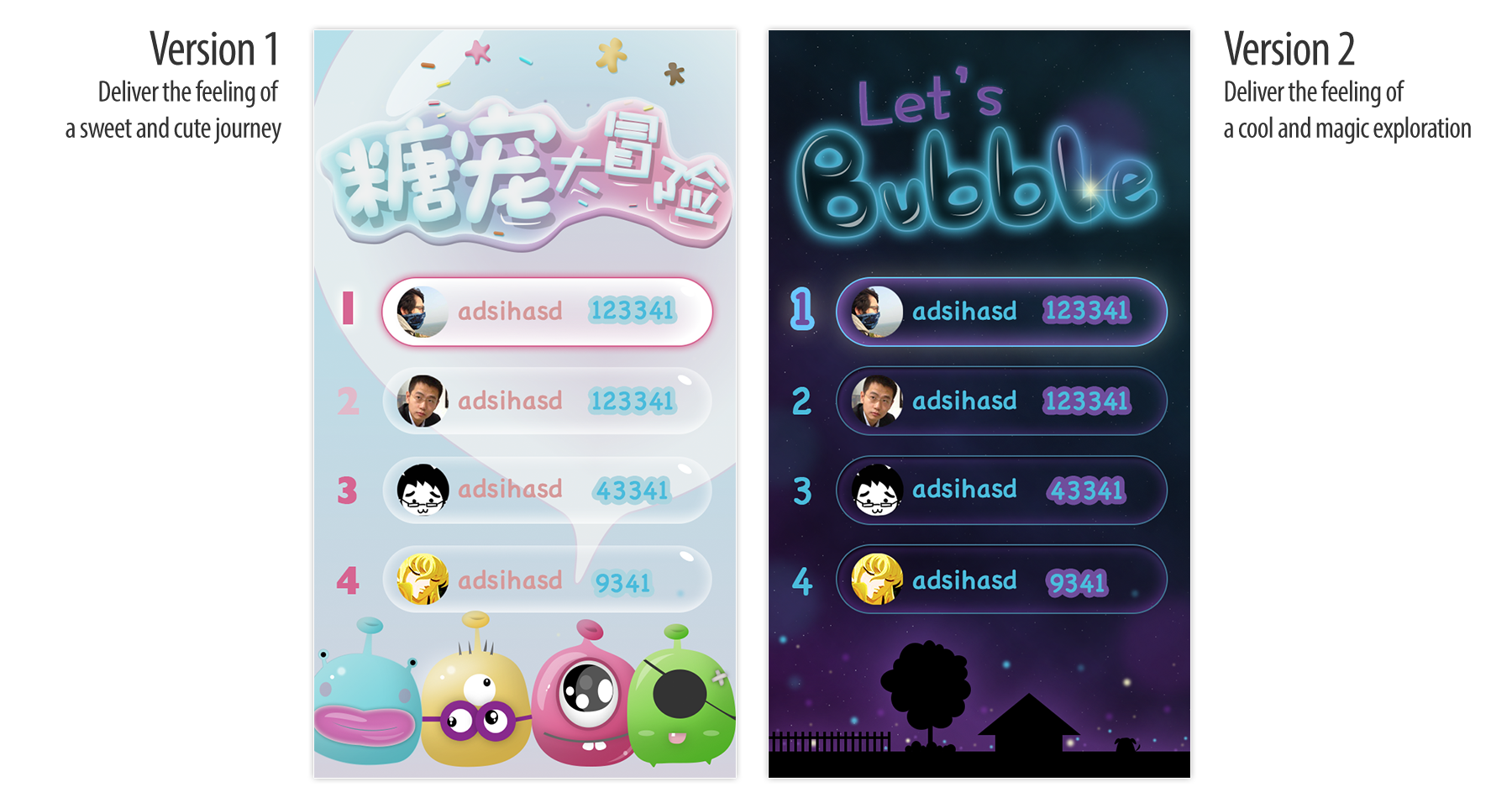
Two versions of the mobile sharing page
User experience
The control method is what we devoted the most time to. We adjusted the ratio of vertical to horizontal movement when translating it from the mobile remote to the TV screen, because people tend to move horizontally more. We also mapped the TV location to the phone screen, because players in the top two spots were confused by the flipped control direction. We created an interactive tutorial for the game as well.
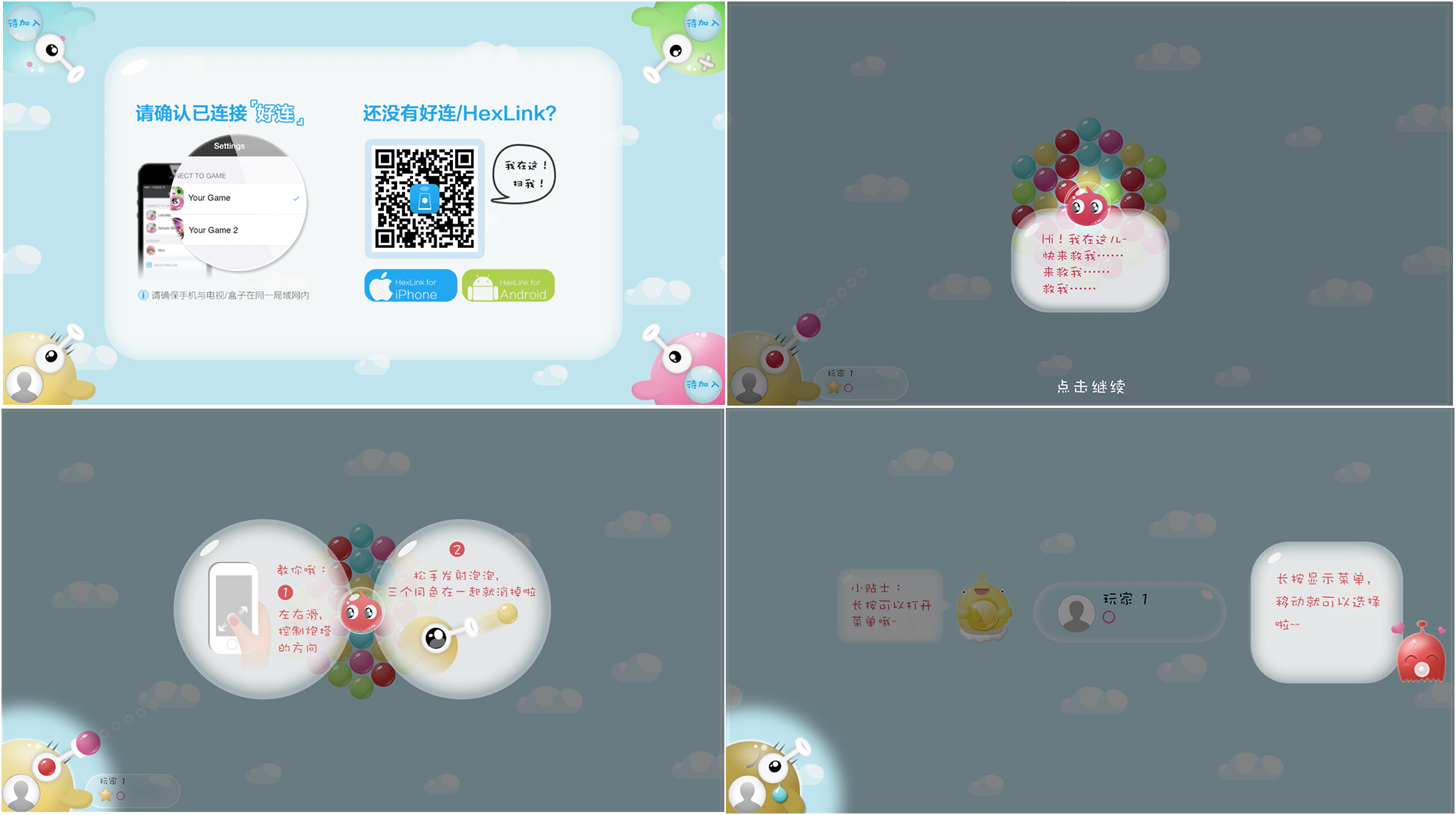
Interactive tutorial
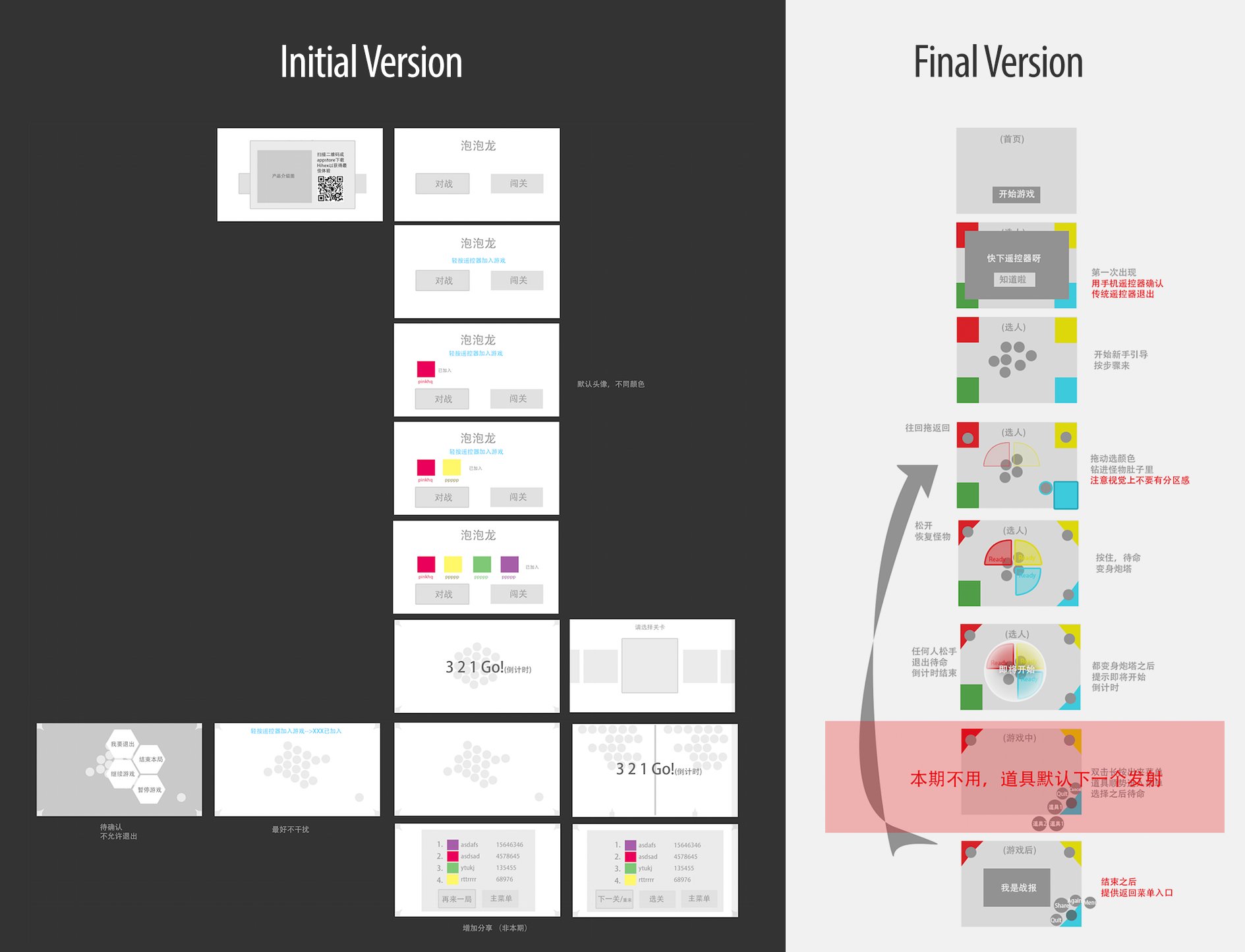
Workflow revision
Story building
To make our game more unique, I thought of creating a coherent story that could guide the development of the game and set a tone for its overall style. After several discussions we settled on the story of a group of candy monsters captured by candies while taking a trip to the candy planet — and the other candy monsters setting out to rescue them by fighting the candies.
Character & scene design
I played around with different visual styles, and found this light, shining, clean and candy-like style worked best on the TV screen and in creating aesthetics suited to our users. I also started learning animation from scratch, and by adjusting frames one by one I created all the animation for our game.
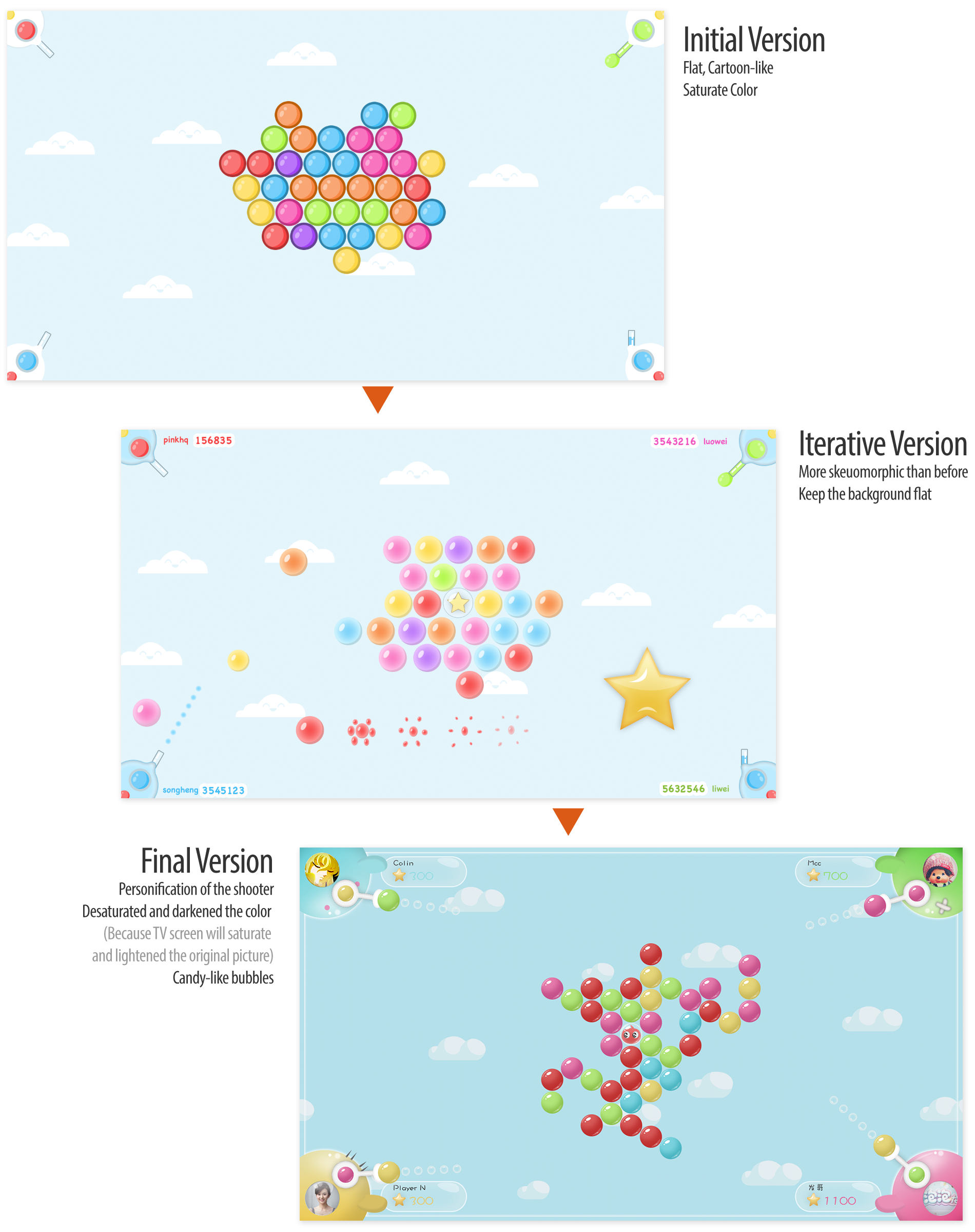
Visual iterations
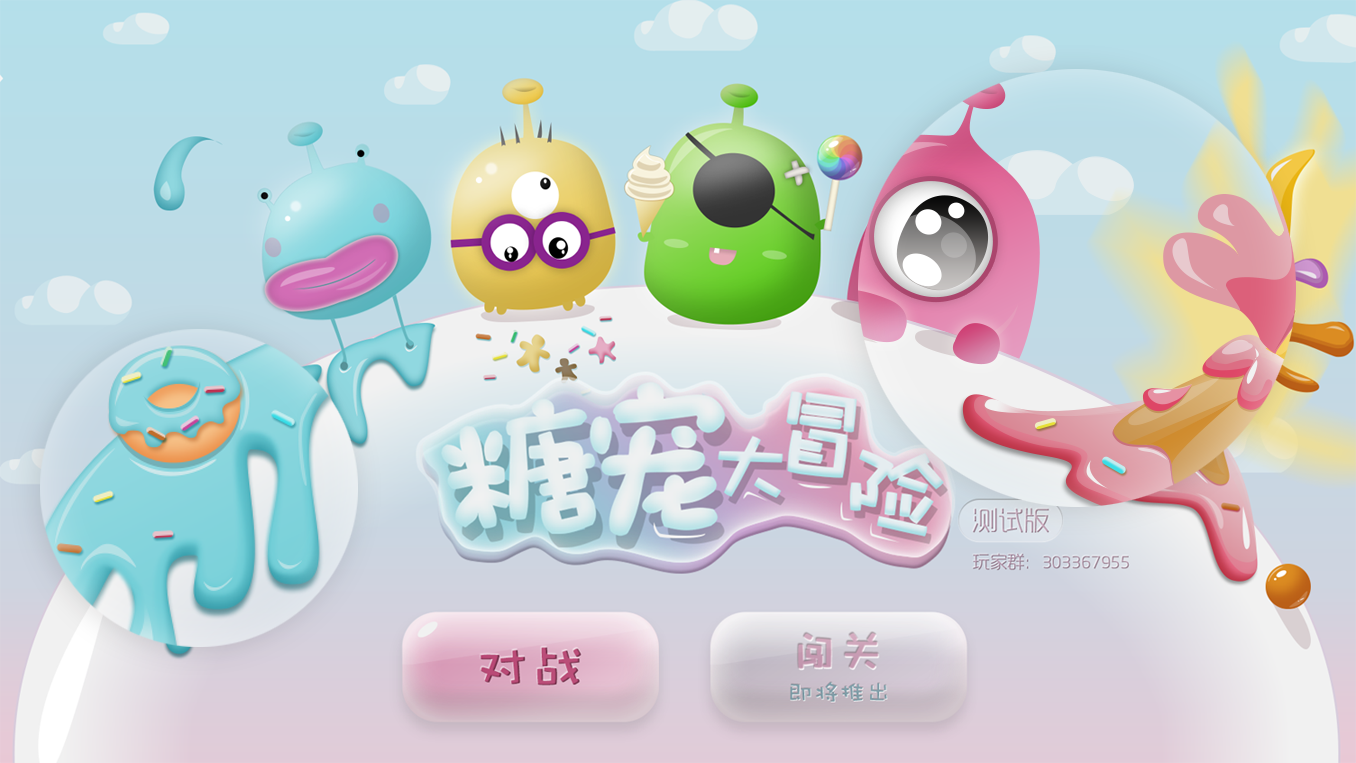
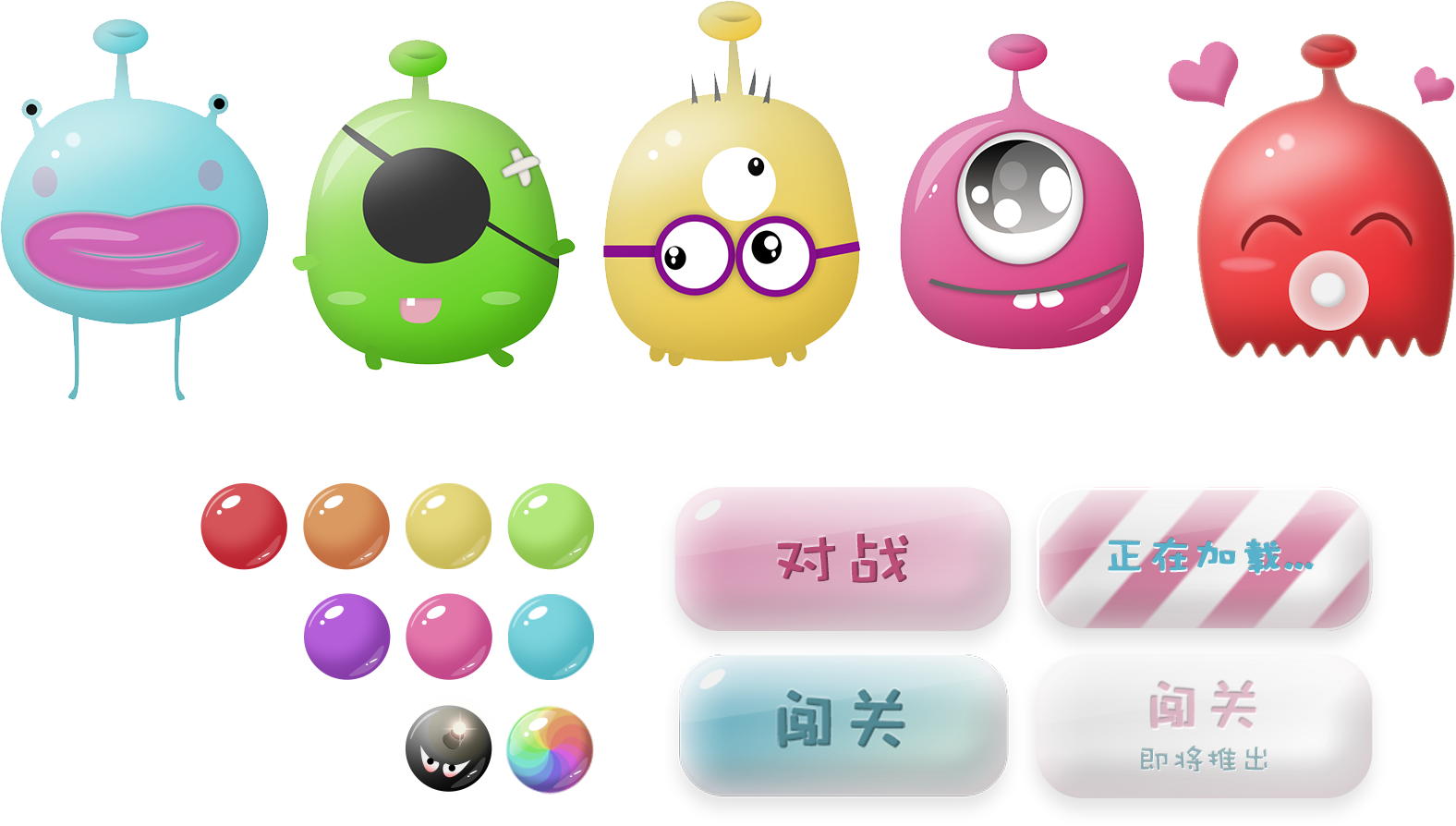
Final visual design & elements
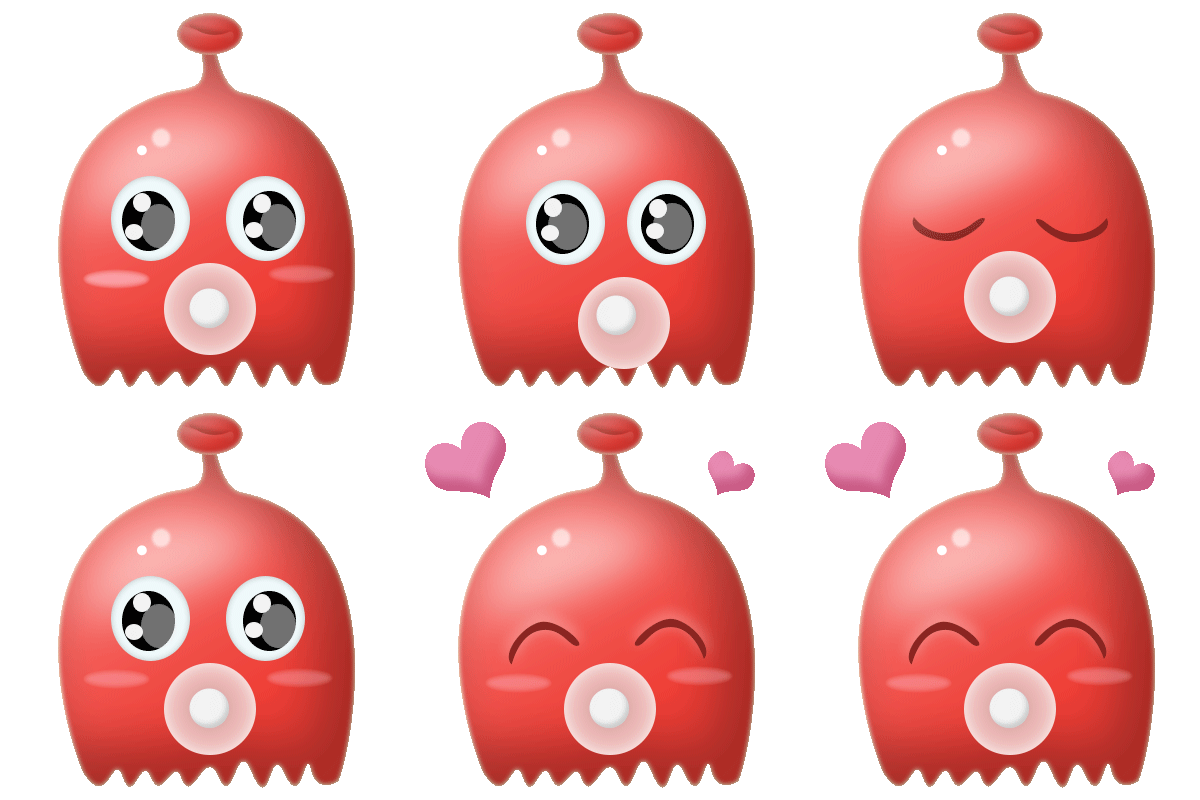
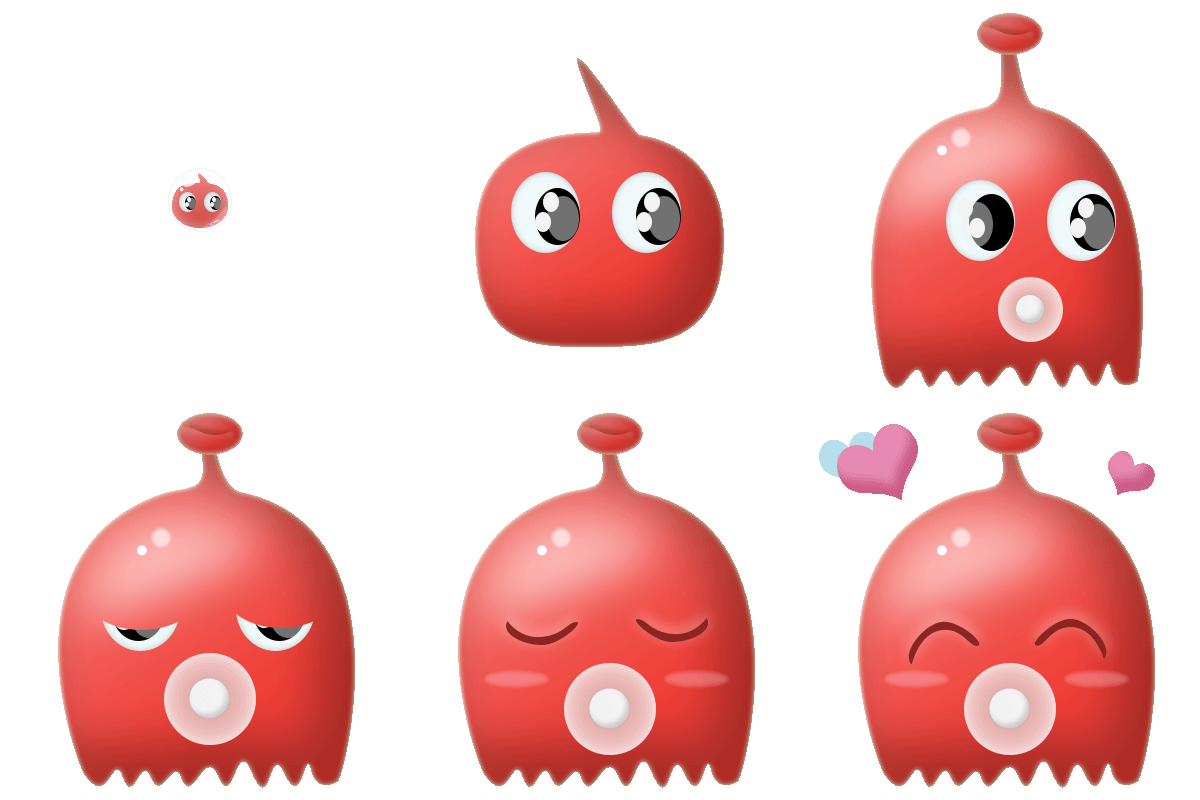
Animation design
Sprint 3
Reading the data for this game, we found that even though most users launched it daily, they didn't stay long — average playing time was 10 minutes. From in-person user testing we heard the game could get boring after a while, because it's all repetitive. So we thought about different ways to make it more fun:
- Add more mechanics to the competitive side of the game.
- Add a collaborative mode, where more levels are introduced.
After discussing with our developer, we decided to start with the second, because the return on investment was higher from an implementation perspective.
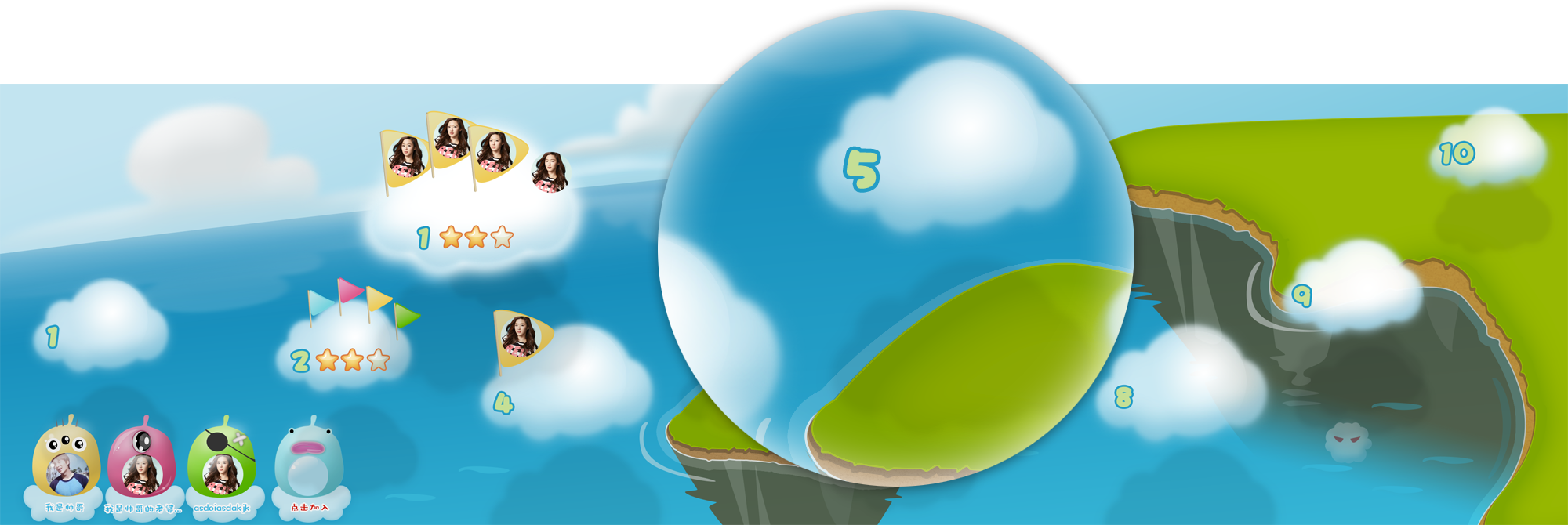
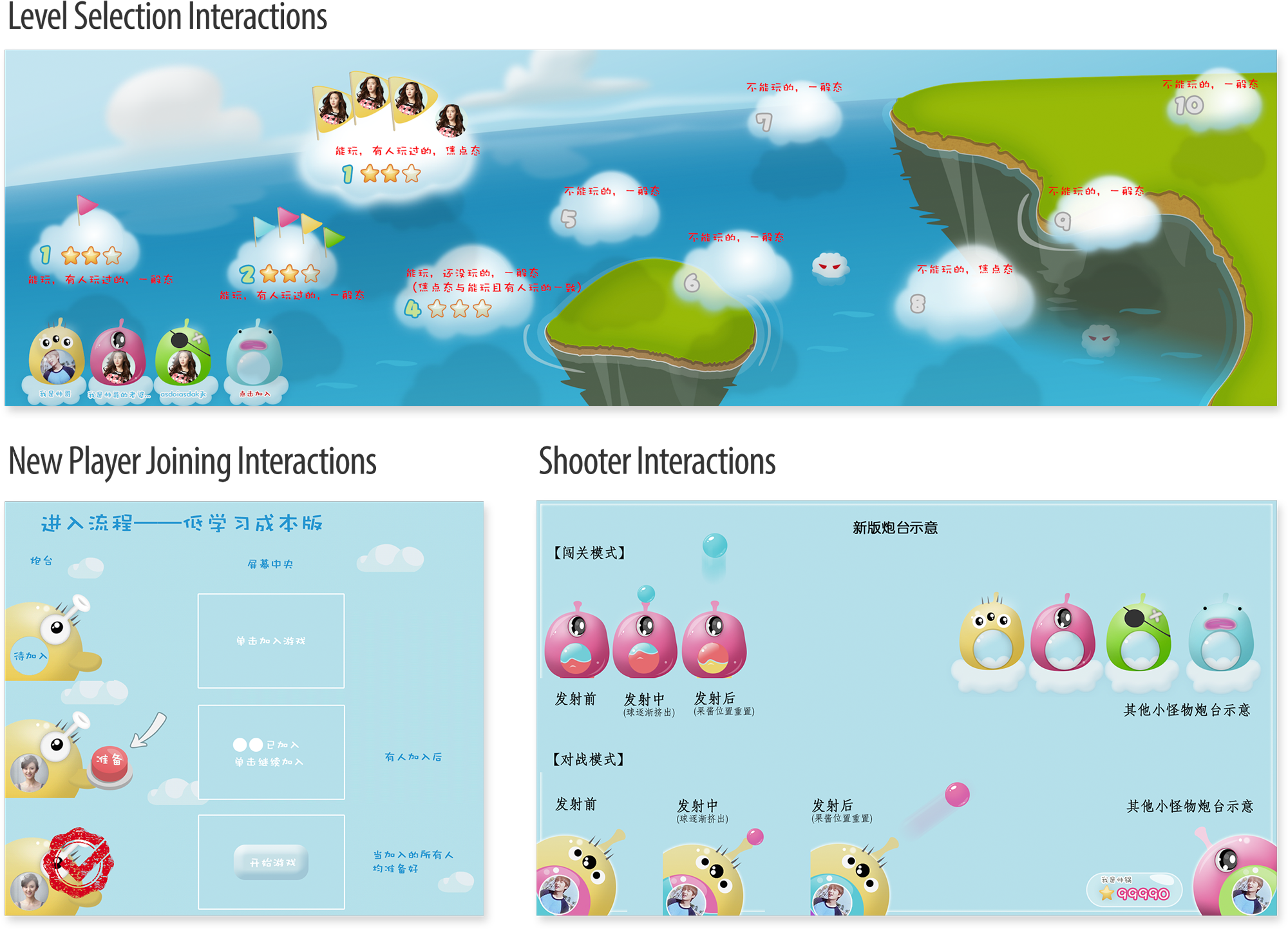
Sprint 3 scene design & interaction specs